

RHODES is thrilled that two of our artists, Martha Zmpounou and J. Carino, have been chosen for the Jackson’s Art Prize shortlist. The finalist group comes from the 16,280 artists that submitted entries to the prize.
The Jackson’s Art Prize is a prestigious annual, international competition, now in its eleventh year, that showcases the best in emerging and established two-dimensional art, including painting, drawing, and printmaking. It was created by Jackson’s Art Supplies, who wanted to begin an open call art competition for artists around the world, with awards including a central London exhibition.
As well as the Judge’s Choice awards, Student award, Amateur award, and others, Jackson’s Art Prize also has a People’s Choice award. Anyone can vote, and this is open until the 18th of March. Cast your vote HERE.
Martha Zmpounou is a Greek visual artist known for her exploration of the human figure as a space for expression and transformation. Raised near the ocean in Greece, Zmpounou was drawn to art from a young age, spending her childhood painting and drawing. Her journey as an artist solidified during her studies at fine art school, where she began to view herself as a lifelong practitioner of her craft.
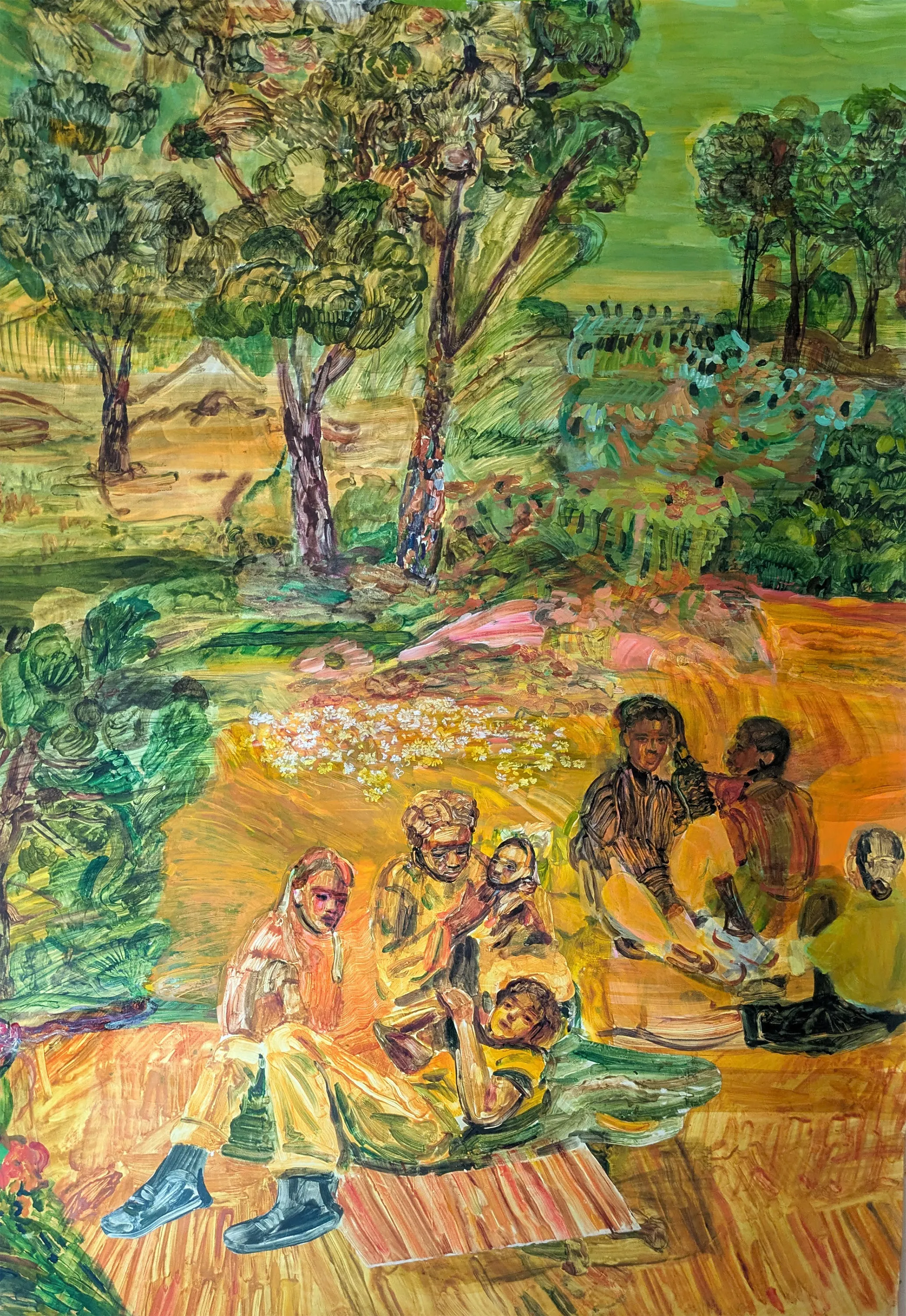
Zmpounou’s work delves into the complexities of the human body, portraying it as a fragmented, multifaceted entity that evolves through layering. She is particularly interested in the interplay between abstraction and representation, often working at the periphery of the figurative. Her mixed-media approach blends diverse techniques, resulting in pieces that capture the fluid nature of identity and the fragmented self.
See Zmpounou’s work chosen for the Jackson’s Art Prize shortlist, Man in Yellow Suit, here.
J. Carino is a contemporary artist known for his exploration of the interactions between people and nature, particularly how our sense of self is intertwined with the natural world. His work features monumental nude, queer figures set against landscapes that are both idyllic and fraught with danger, wrestling with themes of traditional fertility and queer intimacy.
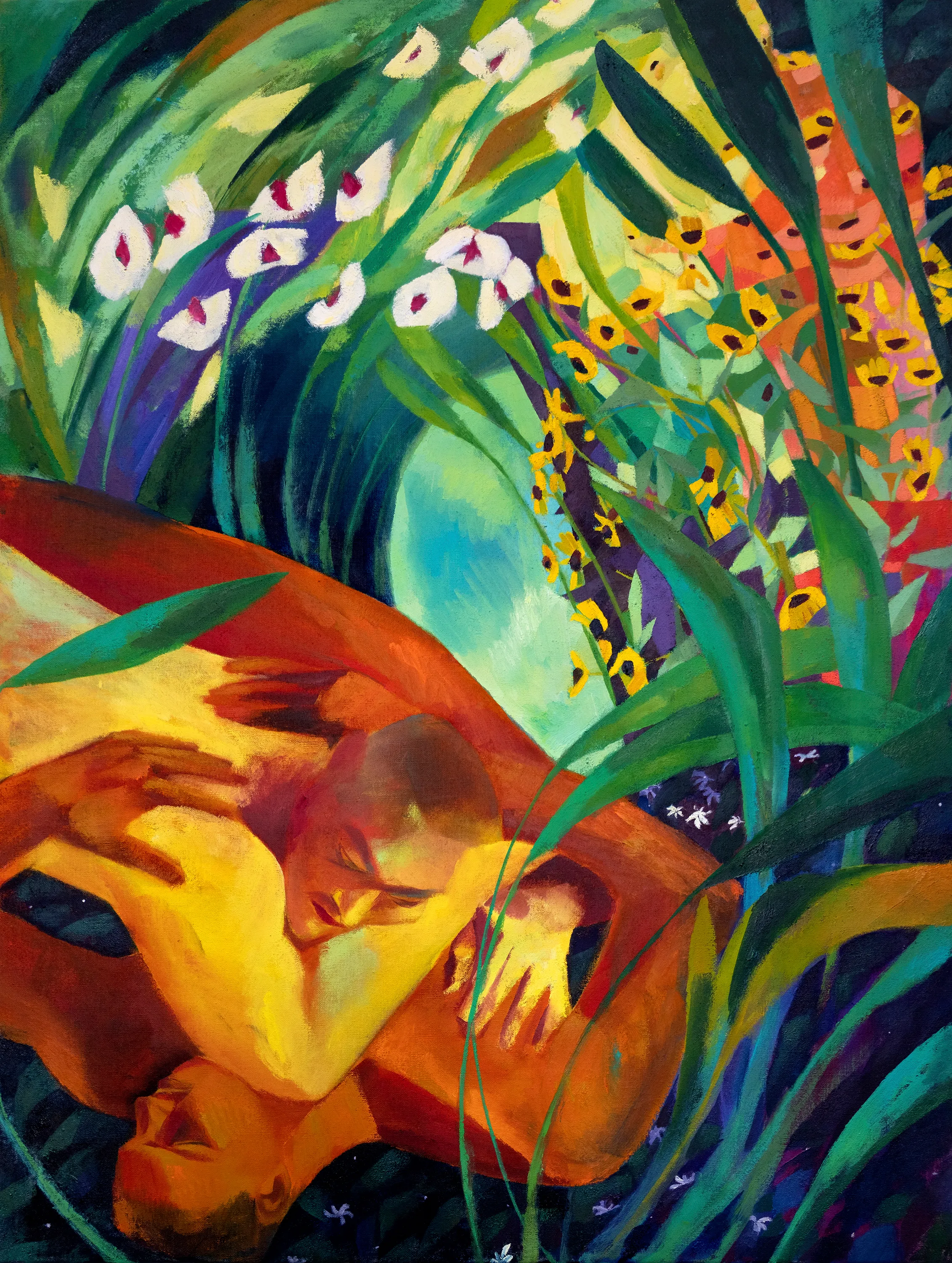
Carino’s artistic practice challenges societal views that label queer identities as "unnatural" by illustrating the inherent connection between nudity, sexuality, and queerness and the elemental aspects of the landscape. The figures in his work reflect various scales of time, from the fleeting lives of wildflowers to the enduring presence of mountains, suggesting a profound continuity between human existence and the natural environment.
See Carino’s work chosen for the Jackson’s Art Prize shortlist, Everything Is Golden, here.
Zmpounou and Carino will both be showing brand new monotypes at London Original Print Fair; email us for more information.


